
This episode is powered by:
Thursday, October 22, 2026 · 5-minute read
Good morning. Today we’re starting with the AI-prepared shopper and what still matters when that customer reaches the showroom. Then we’ll look beneath used-car sales totals, follow Car-Mart’s sale process, and check repair-delay litigation and a production deadline in Mexico. Let’s get into it.
AT THE DESK
The buyer may arrive with an AI answer. They still arrive.
Bain’s October 21 consumer research found that 55% of younger U.S. respondents used AI in vehicle shopping, compared with roughly a quarter of older respondents, defined as people born before 1981; yet nine in ten respondents globally still completed their purchase offline. (Bain research)
That global closing statistic is not a U.S. or Florida conversion rate. The survey covered 12,351 respondents across 11 markets, and price remained a leading U.S. purchase consideration, cited by 68%. (Bain survey release)
The practical interpretation: digital preparation and a physical visit are not competing explanations of the same customer. Consider making the handoff about what the shopper has already researched, then clarifying the actual vehicle, price and available features. Treat the survey as a prompt to examine your process, not proof that a particular AI tool will sell more cars.
|
Interested in advertising? Be the name dealers remember.Have a product or service built for dealerships? Introduce it through The Morning Drive. Tell us your goals, and let's talk about the right advertising opportunity.
|
THE BIG PICTURE
Fewer used sales. More gross per car.
Lithia & Driveway’s third-quarter results offer a useful counterpoint to a volume-only scoreboard: same-store used retail unit sales fell 3.2%, while used gross profit per vehicle rose 13.3% to $1,993 versus a year earlier; total same-store used gross profit increased 9.3%, according to the company’s October 21 release. (Lithia results)
That is not a declaration that everything improved. Same-store new-vehicle gross profit fell 8.5%, F&I gross profit fell 8.1%, and total same-store gross profit declined 1.6%, while aftersales gross profit rose 2.4%; these are company results spanning the United States, United Kingdom and Canada, not a Florida market average. (Lithia results)
The used-car appendix is worth opening. In North American same-store results, Value Autos represented 23% of used sales mix, with a $15,778 average selling price; the presentation also says Lithia procures 60–70% of used inventory from consumers and retails vehicles up to 20 years old, without breaking that sourcing percentage into trades, service-drive purchases and other direct buying. (Lithia presentation, slide 23)
Our takeaway: separate the volume conversation from the acquisition-and-mix conversation. A store can examine which price bands, sources and recon bills are producing its gross without assuming that another group’s inventory recipe will travel intact. The useful comparison is not simply “Did we sell more?” It is whether the cars being bought still leave enough room after the work required to retail them.
USED RETAIL GROSS PER VEHICLE More gross, despite fewer unitsQ3 2025: $1,759 Q3 2026: $1,993
Original Morning Drive graphic. Same-store used retail gross profit per vehicle, Q3 year-over-year; company results, not Florida averages. Lithia, October 21. |
RETAIL WATCH
Car-Mart outlines a sale process, not a completed deal
America’s Car-Mart disclosed October 21 that it had entered an October 16 letter of intent concerning a possible sale of substantially all assets to an unidentified “national dealer”; the transaction provisions are nonbinding. (Car-Mart filing)
The disclosed paths include a shareholder-approved asset sale or alternatives through Chapter 11, with diligence, definitive agreements and required approvals still ahead; the filing does not announce a completed sale or say a bankruptcy petition has been filed. (Car-Mart filing)
For franchised stores watching used-car competitors, this is a company-specific transaction to monitor, not evidence of a marketwide financing freeze. The next meaningful milestones are a signed purchase agreement, identified buyer and actual transaction structure, rather than treating “sale talks” as an operating outcome.
CASE WATCH
A free repair can still raise a timing dispute
An October 15 ruling allowed central warranty claims to proceed in Hamblin v. Toyota Motor Sales USA, a proposed class action in California federal court over recalled 2025 Sienna second-row seat rails. (Original legal reporting) Owners allege repairs took too long; Toyota argued that free repairs and loaners satisfied its obligations. (Legal reporting)
This was a pleading-stage decision, not a finding that Toyota is liable: the judge dismissed an unjust-enrichment claim and allowed amendment of one Ohio warranty claim. (Legal reporting)
For service leaders, the management lesson is to examine the documented repair timeline and customer communications, not just whether the eventual repair is free. This California case does not create a new Florida repair deadline.
SUPPLY WATCH
Puebla has a deadline, not a confirmed shutdown
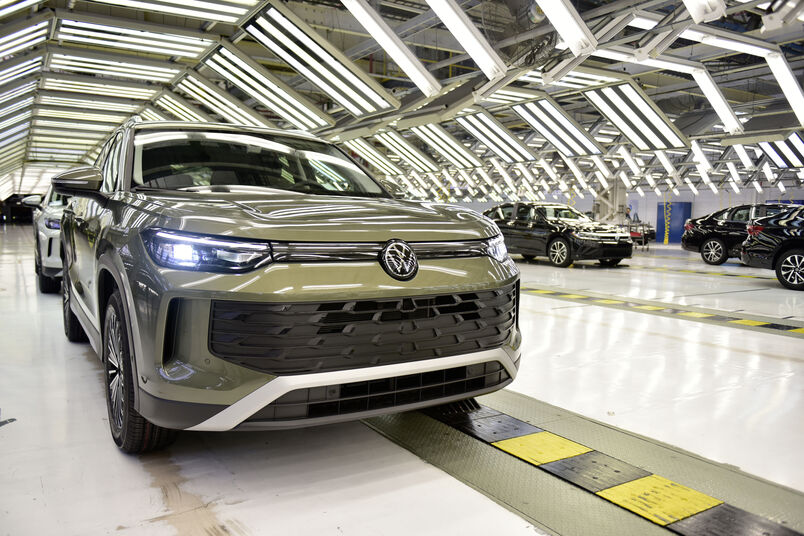
Volkswagen file image, published February 19, 2026; not today’s negotiations. © Volkswagen AG, editorial-use permission and image record.
Volkswagen’s Puebla labor negotiations face an 11 a.m. local-time deadline today, October 22, following workers’ rejection of a proposed agreement, according to October 21 reporting. That is a possible strike deadline, not evidence that production has stopped. (El Universal Puebla)
Volkswagen identifies Puebla as a production location for Jetta, Taos and Tiguan Long Version, making the talks relevant to the supply pipeline. (Volkswagen plant facts)
Watch for an actual settlement, extension or stoppage before changing a customer promise. The reviewed sources do not establish a Florida allocation reduction or delivery delay.